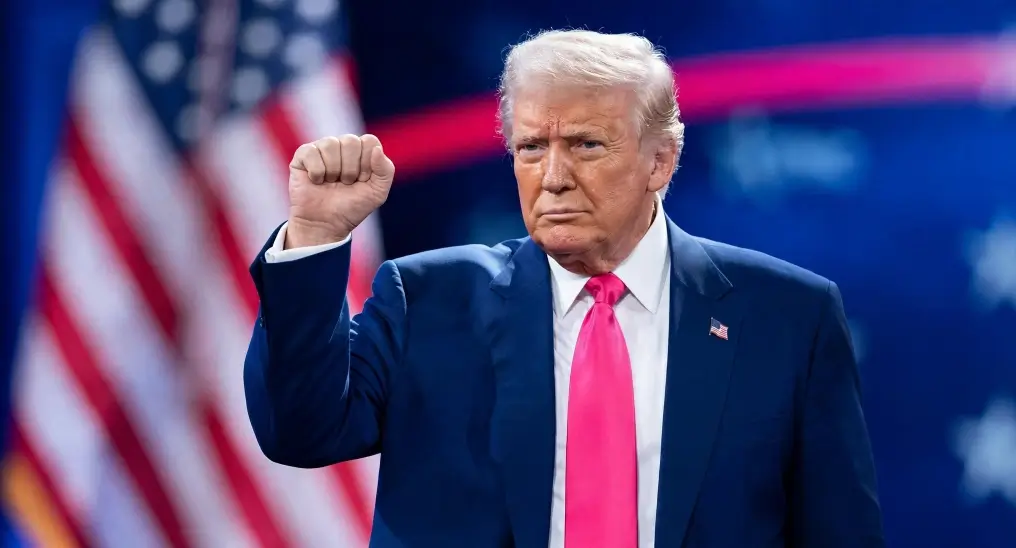
US President Donald Trump has ruled out a fresh war with Iran, saying he is highly unlikely to order new attacks on Tehran if negotiations to end the ongoing conflict continue to make progress.
Trump made the statement on Sunday, November 9, 2026, in a phone interview with CNN, just days after his Republican Party suffered a major defeat in the midterm elections, a loss he admitted was partly linked to the unpopular Iran campaign.
Trump Says Fresh Strikes Are "Highly Unlikely"
According to BusinessWorld and CNN, Trump said the decision to renew military action depends on whether Iran agrees to sign what he described as a "very strong agreement" to end the hostilities that have lasted over eight months.
"It depends on whether or not they sign a very strong agreement. The answer is, highly unlikely it's going to be necessary," Trump told CNN. He added that the US has identified 38 strategic bridges and other infrastructure targets that could be "knocked down in literally one hour" if talks collapse and strikes resume.
"We made a lot of progress with Iran. We're taking out more oil now than we were before the war. It's not a war. It can't be a war when for five months nobody was hurt, killed, or anything else. It's not a war," Trump said in an earlier briefing on November 7.
The US President has repeatedly downplayed the scale of the confrontation, describing it as a "small military conflict" and "small potatoes" for the United States, despite months of air strikes, oil tanker incidents in the Strait of Hormuz, and rising global crude prices.
Midterms, Oil, and Strait of Hormuz Tensions
Trump's comments come at a sensitive political moment. Last week, Democrats won control of both chambers of Congress in the 2026 midterm elections. Trump acknowledged that voter frustration over the Iran war contributed to the Republican defeat, though he insisted he would "do it again" to stop Iran from acquiring a nuclear weapon.
Tensions remain high around the Strait of Hormuz. On Saturday, Iran's Revolutionary Guards Navy reported that two oil tankers caught fire after hitting mines while attempting to pass through an "unauthorized route" in the strait. Iran's semi-official Tasnim agency also reported two missiles striking Qeshm Island, though no official damage assessment has been released.
In Washington, Trump posted on Truth Social on Sunday afternoon that "Task Force Iron Gate is in full force and effect" on Iran, a task force set up to disrupt weapons and oil shipments linked to Tehran.
Qatar Mediation and What Happens Next
The White House has confirmed that Trump will meet Qatar's Prime Minister Sheikh Mohammed bin Abdulrahman Al Thani at the White House on Monday, November 10, for mediation talks aimed at securing a lasting ceasefire.
Washington and Israel launched major strikes against Iranian nuclear and military facilities in 2025 and again in early 2026, citing the need to prevent Iran from developing a nuclear weapon. A Congressional Research Service assessment published in October 2026 said it remains unclear how far the strikes have actually degraded Iran's nuclear capability.
For now, there is no sign of a large-scale US military operation resuming, despite Trump's earlier hints that he would renew heavy bombardment after the midterms. Analysts say the administration is shifting focus to diplomacy and economic pressure.
M2NICE Editorial Note: This marks a clear shift in Trump's tone. For weeks he threatened full-scale bombardment of Iran after the midterms if Tehran refused his terms. Now, facing pressure at home after losing Congress and rising oil prices, he is framing the conflict as over. The meeting with Qatar will be key to whether this is a true de-escalation or just a pause.




Comments
0 COMMENTS