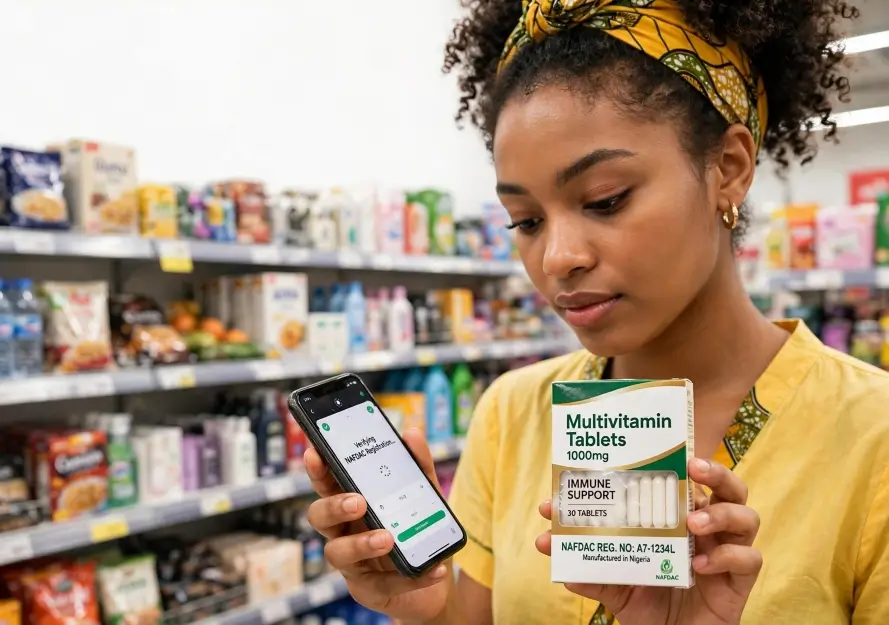
From fake diabetes drugs to counterfeit baby food and bleaching cosmetics, Nigerians are sharing viral horror stories of how fake products almost cost them their lives. With counterfeiters copying NAFDAC numbers and packaging, knowing how to check if a product is fake and how to report it to NAFDAC is no longer optional – it is a survival skill for every family.
The National Agency for Food and Drug Administration and Control (NAFDAC) has warned that up to 70 percent of cosmetics seized in market raids are either counterfeit or unregistered, while fake medicines like Forxiga, Proguanil tablets and popular antibiotics are currently circulating in Lagos, Abuja and Onitsha.
How To Check If A Product Is Fake In Nigeria
Before you buy any regulated product – drug, food, water, cosmetics, or chemicals – NAFDAC says you must check five things: NAFDAC registration number, manufacturer's name and address, batch number, manufacturing and expiry dates, and intact packaging. If any is missing, don't buy.
To verify, use NAFDAC's official tools. For foods, drinks, cosmetics and chemicals, visit the NAFDAC Automated Product Administration and Monitoring System (NAPAMS) at registration.nafdac.gov.ng and enter the NAFDAC number. For medicines, use the NAFDAC Greenbook at greenbook.nafdac.gov.ng or the Greenbook App on Play Store and App Store. The result must match the product name, manufacturer and dosage you have in your hand.
A product carrying a NAFDAC registration number is not necessarily genuine. Counterfeiters copy registration numbers from legitimate products – NAFDAC warns.
This is why a successful search is not enough. NAFDAC DG Prof. Mojisola Adeyeye advises consumers to also inspect the physical pack: look for spelling errors, blurry printing, poor seals, mismatched barcodes, and prices that are too good to be true. For medicines, use the Mobile Authentication Service (MAS) – scratch the panel on the pack to reveal a PIN and text it to 38353, 38351 or 20831. If it says fake or unverifiable, don't use it.
How To Report Fake Products To NAFDAC
If you suspect a product is fake, substandard or unregistered, keep the evidence. Don't throw away the pack, bottle, receipt or leftover content. Take clear photos of the front, back, NAFDAC number, batch number and where you bought it.
Report through these official NAFDAC channels for fast action: Call toll-free 0800-162-3322 for fake products, email sf.alert@nafdac.gov.ng or sf.alerts@nafdac.gov.ng, use the NAFDAC Greenbook App or web portal at greenbook.nafdac.gov.ng to file a complaint, or visit the nearest NAFDAC state office. For adverse reactions after taking a drug or using a cosmetic, use the MedSafety App (Android and iOS) or email pharmacovigilance@nafdac.gov.ng.
For general complaints and reforms, you can also call 09097630506, 09097630507 or 0700-162-3322 and email reforms@nafdac.gov.ng. NAFDAC says every report helps them track sources and conduct mop-up raids, like the recent fake alcohol factories busted in Lagos and Aba.
Viral Horror Stories That Should Scare You
In recent months, NAFDAC issued public alerts about counterfeit Forxiga diabetes drugs labelled Forzigar and Foziga, fake Proguanil malaria tablets Projeanil and Re-Granil carrying a fake NAFDAC number 04-6433, and suspected counterfeit toothpaste. Victims online have shared stories of kidney damage after using fake skin creams, children hospitalized after drinking fake bottled water, and families spending thousands on drugs that had no active ingredient.
One viral case in October 2026 involved a woman who bought a popular whitening cream from an Instagram vendor – no NAFDAC number, blurred label, and a strong chemical smell like paint stripper. She suffered severe burns. Another user reported buying cheap antibiotics from a roadside kiosk – the MAS code returned "cannot be verified" and his infection worsened.
M2NICE Editorial Note: For your lifestyle readers, always buy from licensed pharmacies and trusted supermarkets, not roadside or random online sellers. Before paying, spend 30 seconds to verify the NAFDAC number on NAPAMS or Greenbook and scratch the MAS panel. That small habit is what separates a smart shopper from a horror story victim.